


Professionals are under pressure to communicate clearly and quickly. Whether you’re pitching a new strategy, sharing quarterly results, or aligning a team around a new idea, you have a limited window to capture attention and keep it. In the battle to maintain engagement, poor slides can derail even the strongest message.
Many presentations lose audiences not because the ideas are weak, but because the slides are cluttered, inconsistent, or difficult to follow. When a deck is visually hard to scan, the audience has to work harder to understand the message. That friction adds up quickly.
AI is often positioned as the answer to faster presentation creation. But speed is only a small part of the story. The bigger question is whether AI-powered presentations actually improve engagement, or if they simply help people make slides faster.
The strongest advantage of AI presentations is that they make engagement best practices easier to apply. By helping creators prioritize structure, visual hierarchy, and storytelling, AI-powered tools reduce the manual work that often leads to classic slide failures. With Beautiful.ai, you can focus on the story you want to share, not the unintended impression your deck might leave.
What makes a presentation engaging?
There is plenty of advice about how to improve a presentation: keep your points concise, show instead of tell, avoid large blocks of text, use strong visuals, and speak clearly. All of that matters. But it overlooks a practical truth: not everyone has the time or design resources to build a polished presentation from scratch.
Engagement comes from clarity, pacing, and visuals that help audiences follow the message. Strong presentations are easy to scan, visually consistent, and focused on one idea at a time. That means engagement is shaped by slide design as much as delivery. A great presenter can make a message more compelling, but the slides still need to support the story. If the audience is trying to decode a cluttered slide or read paragraphs of text while someone is speaking, their attention is divided.
That is where AI-powered presentation tools can make a meaningful difference. In Beautiful.ai, AI-assisted structure, smart visuals, and automated design work together to help users create clearer presentations without having to manage every design decision manually.
Where traditional slides fall short
Traditional slide tools offer flexibility, which can be valuable for experienced designers or teams with strong creative systems. There’s a reason professionals pay hundreds of dollars to get certified in PowerPoint. But that flexibility also puts the burden of design on the person building the deck.
Many presentation creators tend to fall into one of two common patterns: the perfectionist or the casual user. The perfectionist spends more time than they have trying to control every element. Alignment and consistency are critical, but the manual effort required to achieve these goals is consuming. The casual user, meanwhile, doesn’t let themselves get bogged down by those minor details, even if it’s to their own detriment. Either way, the creative freedom that enables presentation design experts to soar becomes a handicap for the typical user.
Over the course of a deck, these manual design decisions can become time-consuming and lead to inconsistency. Instead of refining the message, presenters often waste valuable time nudging boxes into place. When the pressure is on to finish an important pitch, a messy deck can send the message, “We don’t take this seriously, so why should you?” That can create tangible losses for a business.
Traditional tools can absolutely produce engaging presentations in skilled hands, but they do not naturally guide most users toward engagement. They give users a blank canvas, and a blank canvas can quickly become a cluttered one.
Why AI-powered presentations perform better
AI-powered presentations perform better for engagement because they help users start with structure instead of an empty slide. That shift matters.
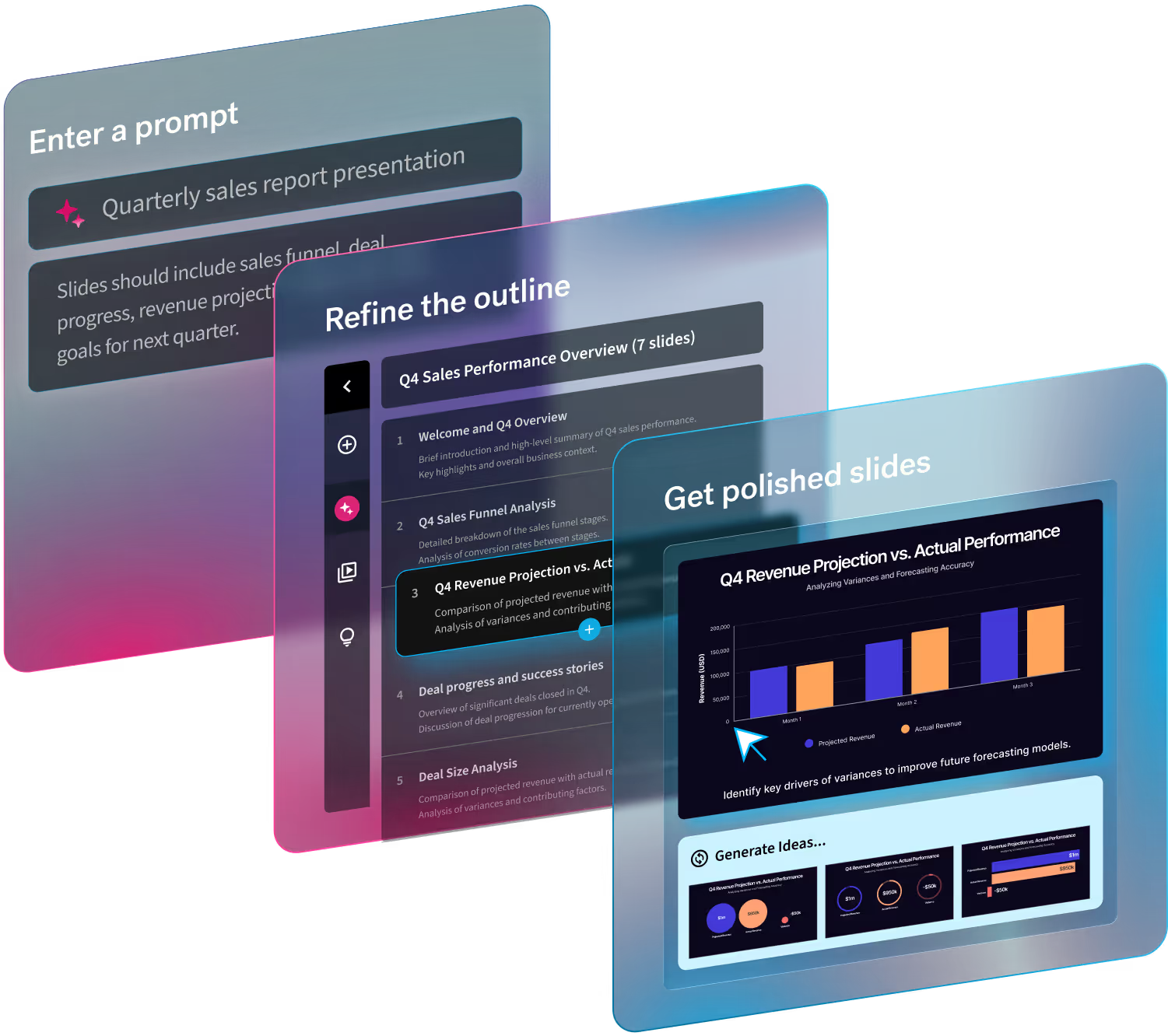
A blank slide asks, “What should this look like?” An AI-assisted workflow starts closer to the story you’re actually trying to tell.That helps presenters move from scattered information to a more organized flow. In Beautiful.ai, users can upload files to give the AI more context, customize themes to maintain branding across presentation, and generate an outline from a prompt before turning that work into a presentation.
Starting with a clear structure gives the presentation a stronger foundation. Instead of building one slide at a time in isolation, users can begin with a logical narrative arc and refine from there.
AI also helps with visual hierarchy. Strong slides make it clear what the audience should notice first and how each element relates to the message. Beautiful.ai’s library of 100+ Smart Slide layouts help users avoid common design mistakes, like overcrowding slides or making layout choices that compete with the message. With intentional design guardrails and automation, they drastically reduce the repetitive and mundane parts of the presentation process.
Visuals play a major role in keeping audiences engaged. Anything out of date or discordant runs the risk of pulling an audience away from the story. In addition to a library full of professional stock images and videos, Beautiful.ai’s AI image generator allows you to create the perfect visual in a sentence or two. Just enter a prompt, select an image style up front so to stay true to branding or personal style, and get a custom image in seconds. The result is a visual asset 100% unique to you and your story, no designer needed.
The value is not that AI removes human judgment; the value is that AI supports better judgment for more engaging delivery. It handles much of the formatting, layout, and visual consistency work so presenters can focus on the point they are trying to make.
AI vs. traditional: the key difference
The difference between AI presentations and traditional slides comes down to three engagement drivers: clarity, consistency, and storytelling.
AI helps improve clarity by reducing clutter and encouraging focused slides. Instead of trying to fit every detail onto one page, presenters are guided toward cleaner layouts that support one main idea at a time.
Consistency can be achieved through AI by applying design rules across the deck. That means slides look more unified without requiring the creator to manually check every font, color, margin, and visual treatment. In Beautiful.ai, teams can apply brand kits to keep presentations aligned with company standards.
AI also strengthens storytelling by helping organize content into a logical flow. A more structured deck is not only easier for audiences to follow, but easier for presenters to deliver. Traditional slide tools can achieve the same result, but depend heavily on the creator’s design ability, available time, and presentation experience. AI levels the playing field, helping more people create professional decks, regardless of design skills or experience.
The new default for modern teams
Modern teams need to move quickly without sacrificing quality. There is an endless flow of ideas, data, and documents that need to be turned into polished presentations for meetings, pitches, reports, training, and internal updates. Our third annual AI in the Workplace Survey found that 54% of managers believe workplace expectations are increasing due to AI.
At the same time, audiences have little patience for decks that are hard to follow. Attention spans are already overwhelmed by the sheer quantity of content that gets consumed on a daily basis. In order to rise to this occasion, teams need tools that help them keep up with growing expectations while maintaining audience engagement.
AI bridges the gap between shrinking attention spans and higher workplace expectations because it helps teams create better presentations with less friction. It reduces the amount of time spent formatting and increases the amount of time available for refining the message. This makes good, engaging design more repeatable across use cases.
That consistency is especially important for teams. When everyone builds decks manually, quality can vary widely from one presentation to the next. AI-powered design systems help close that gap by giving every user access to the same structural and visual support.
Beautiful.ai was built around this idea: presentations should be engaging by design. Smart templates, automated formatting, brand controls, AI-assisted creation, and visual tools all work together to help teams create decks that look polished and communicate clearly.
AI presentations are not just faster to make. Their real advantage is that they make engaging presentations more accessible and easier to scale.
Beautiful.ai helps teams create presentations that are clearer, more polished, and more engaging from the start. Try our new Create with AI Workflow today and see how it can transform your presentation.

.png)




.avif)
